- Home
- HCM Platform
- Employee Scheduling
Employee Scheduling Should
Save Costs and Optimize Performance
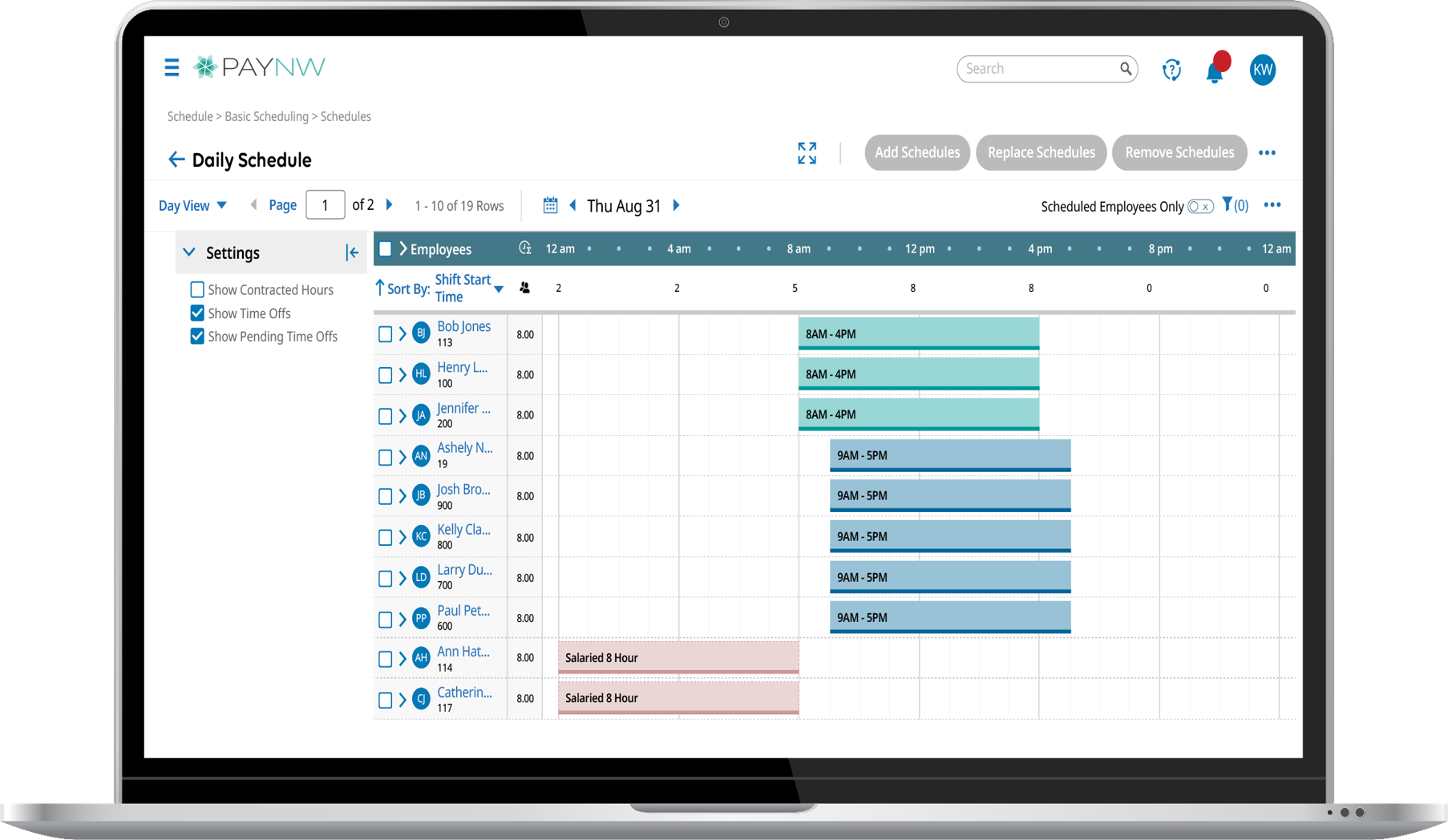
With our employee scheduling tool, employers can quickly fill open shifts, maximize productivity and engagement, and minimize overtime. Businesses can take into account employee preferences and company needs without the manual headaches and processes. Key benefits include:
Controlled labor costs
Improved employee engagement
Increased employee productivity
Reduced labor law compliance risks
The Right Person, In The Right Place, At The Right Time, Every Time!
Workforce scheduling is often a time-consuming and downright frustrating task. In order to be successful and create schedules that work, you need to balance employee availability, preferences, seniority, pay rates, skills, and certifications with fluctuating business demands—all while keeping labor costs under control without compromising service quality or productivity.
Boost Compliance and Empower Employees
Our scheduling solution helps businesses make informed, budget-conscious scheduling decisions that align with both internal scheduling policies and state and federal labor regulations.
It also improves employee engagement by giving workers self-service control over shift changes and availability preferences, and helps avoid safety violations by ensuring employees are scheduled according to their skills and certifications.
Enhance Scheduling With Text Alerts For Shift Changes, Additions, & More!
Download our TeamText Overview today to learn more about how our text alert solution can help you improve your employee scheduling process.
Explore Our Other HCM Solutions
Frequently Asked Questions
-
What is employee scheduling software, and how does it work?
Employee scheduling software helps businesses create, organize, and manage employee work schedules through a centralized platform. These systems simplify tasks such as assigning shifts, tracking employee availability, managing schedule changes, and monitoring labor costs. PayNW's cloud-based employee scheduling software helps employers create schedules based on business needs, employee preferences, skills, and certifications, reducing manual administrative work while improving workforce efficiency.
-
How can employee scheduling software help businesses reduce labor costs?
Employee scheduling software helps businesses control labor costs by improving staffing decisions, minimizing unnecessary overtime, and aligning employee schedules with business demands. Employers can consider factors such as employee availability, pay rates, and staffing requirements when assigning shifts. PayNW's scheduling solution helps businesses make budget-conscious scheduling decisions while maintaining appropriate staffing levels, improving productivity, and reducing unnecessary labor expenses.
-
Can employee scheduling software help businesses manage shift changes and open shifts?
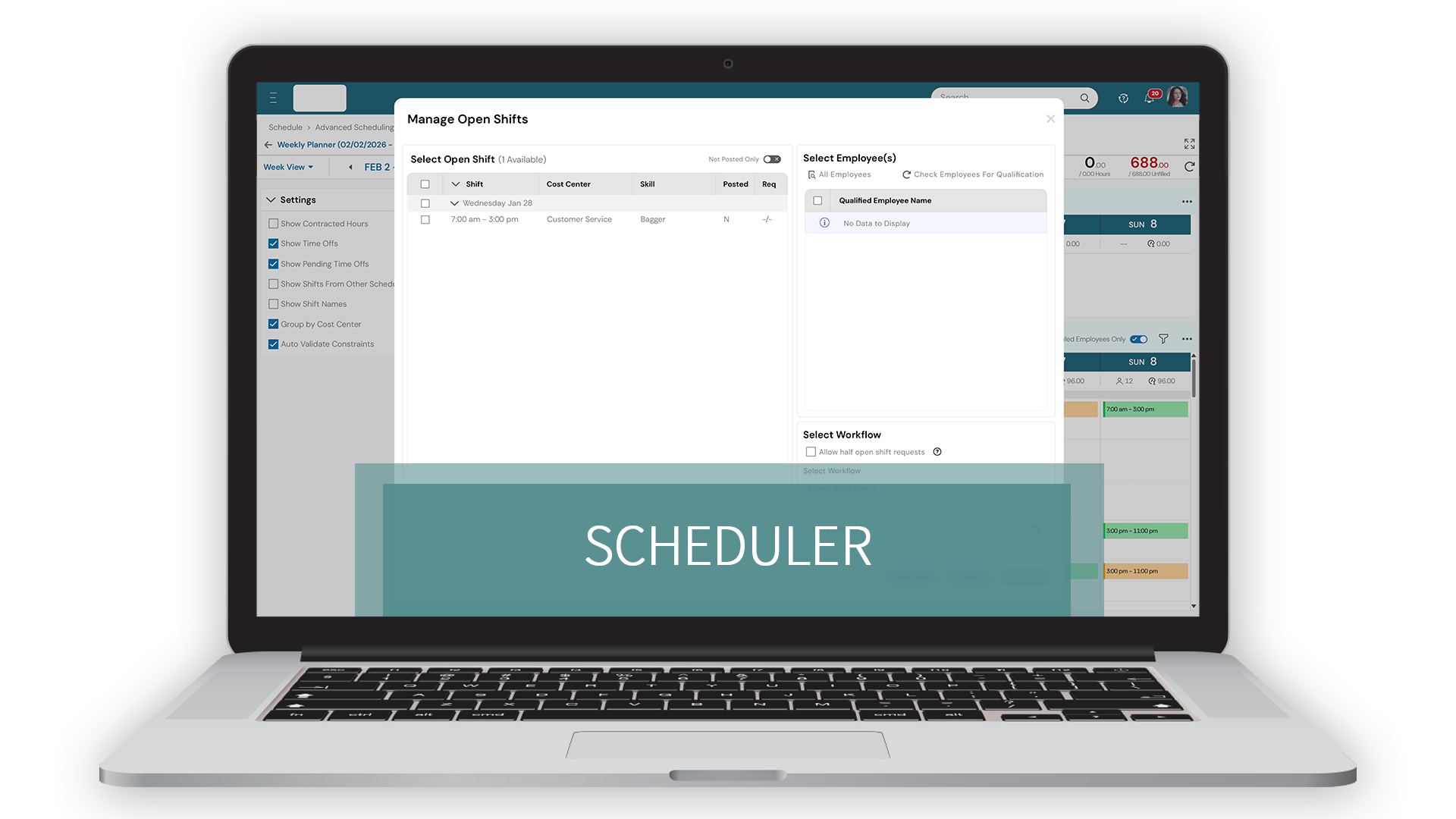
Yes. Employee scheduling software can simplify shift management by helping employers fill open shifts, manage schedule adjustments, and communicate changes to employees. These tools reduce the need for manual scheduling updates and help businesses respond to unexpected staffing needs. PayNW's scheduling solution allows employers to manage open shifts and provides employees with self-service options for shift changes and availability preferences. Businesses can also use PayNW's TeamText solution to send text notifications about scheduling changes.
-
How can scheduling software help businesses comply with labor laws?
Employee scheduling software can support labor law compliance by helping employers manage schedules according to applicable regulations and internal workforce policies. These tools can help businesses monitor overtime, account for employee qualifications, and make more consistent scheduling decisions. PayNW's scheduling software helps employers consider federal and state labor regulations, employee skills, certifications, and scheduling policies when assigning shifts, reducing the risk of scheduling-related compliance issues.
-
Can employee scheduling software account for employee availability, skills, and certifications?
Yes. Advanced employee scheduling software allows businesses to consider employee availability, qualifications, certifications, and other workforce requirements when creating schedules. This helps employers assign qualified workers to appropriate shifts while accommodating employee preferences whenever possible. PayNW's scheduling solution accounts for employee availability, seniority, pay rates, skills, and certifications, helping businesses create more effective schedules without sacrificing productivity or service quality.
-
How does employee self-service scheduling benefit businesses and their employees?
Employee self-service scheduling gives workers greater flexibility and involvement in managing their work schedules. Depending on the platform, employees may be able to update availability preferences, request shift changes, and receive scheduling notifications without relying on managers for every adjustment. PayNW's scheduling software provides self-service options for shift changes and availability preferences, helping improve employee engagement while reducing administrative work for supervisors and HR teams.
-
What should businesses look for when choosing employee scheduling software?
When choosing employee scheduling software, businesses should consider features such as automated scheduling, labor cost management, employee availability tracking, shift change management, and employee self-service. The ability to account for employee qualifications, scheduling policies, and overtime is also important. PayNW's cloud-based scheduling solution helps employers balance staffing requirements with employee preferences, manage open shifts, monitor labor costs, and communicate scheduling changes more efficiently.