
.png) Lori G. Brown
Lori G. Brown
The Things ADHD Gave Me
.png?width=30&name=Leading%20with%20Lori%20Right%20Facing%20%20(Website).png) Lori G. Brown : July 23, 2026 at 8:00 AM
Lori G. Brown : July 23, 2026 at 8:00 AM
Discover how ADHD brought unique gifts like curiosity, hyperfocus, and problem-solving, shaping a fulfilling life and career despite its challenges.
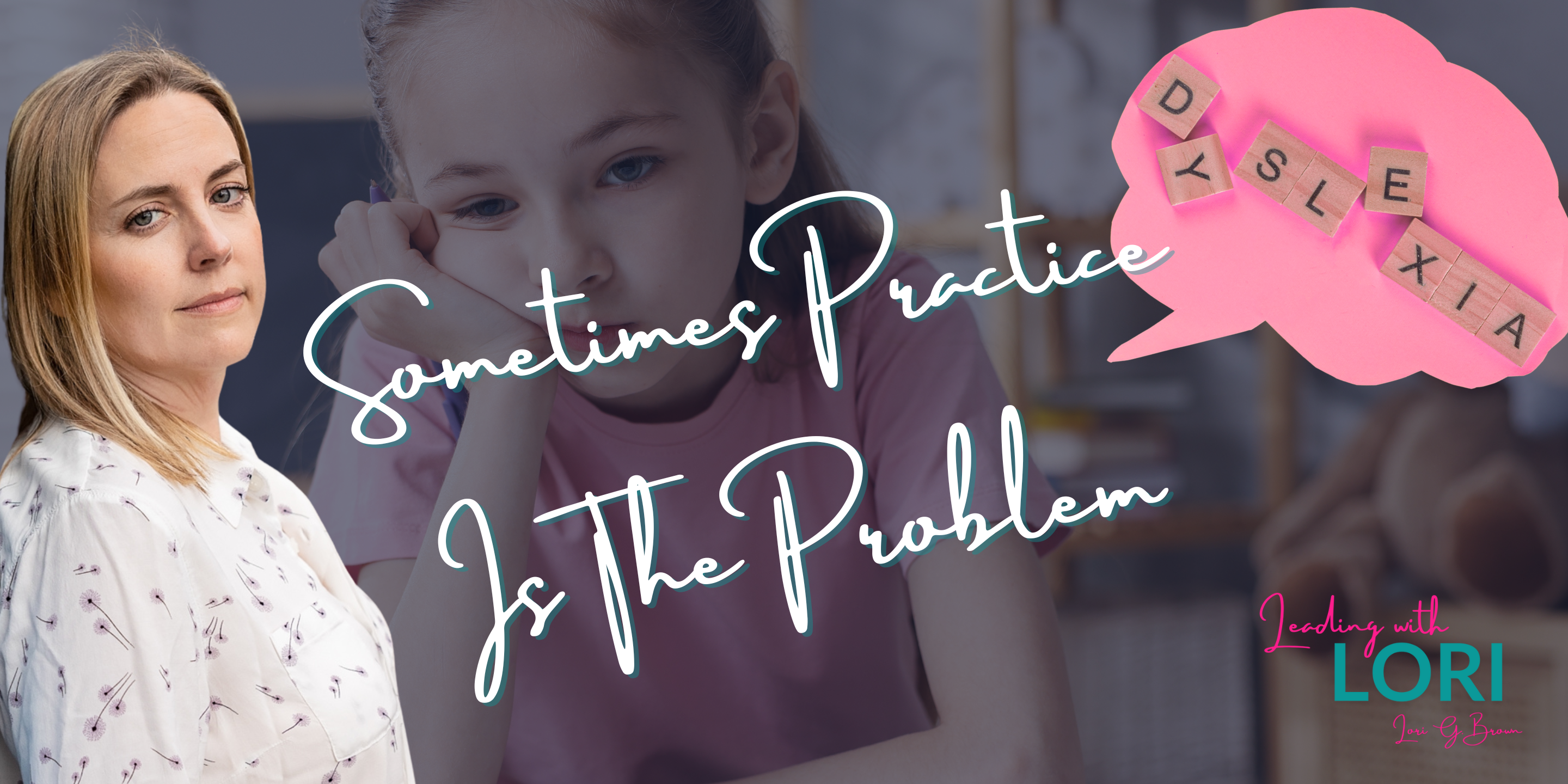
I have been trying to write this blog for a long time.
Not because I did not want to, but because some stories take a while to find their way out.
This is a story I often find myself sharing in conversation. Most often at conferences.
We start talking about work. Then kids. Then school.
And eventually, I tell this story.
More than once, the response has been the same:
“Oh my God. I think that might be my kid.”
Most recently, I was at a conference in Florida, having lunch with a vendor.
The kind of lunch where someone shows up hoping to win your business.
What he got instead was a completely different conversation.
We started with the usual small talk. Work. Travel. Kids.
And then I told him this story.
Halfway through, his face changed. He got quiet. Then he teared up.
Not because something was “wrong,” but because something finally made sense.
He told me his stepdaughter was getting straight A’s… except for math.
Every evening, he and his wife sat down with her for thirty minutes.
Flash cards. Times tables. Repetition. More practice. More pressure.
Nothing moved.
What he realized while I was talking was simple.
She was not lazy.
She was not incapable.
Her brain just worked differently.
A week later, he messaged me on LinkedIn.
He had gone home, talked to his wife, and started getting answers.
The relief they all felt was enormous.
That was the moment I knew this story probably belonged on paper.
So here it goes.
Our youngest daughter is twelve now. If you do the math, that means she was a COVID kindergartener.
In Washington, she had about five months of school before everything shut down.
Then she was home. For a long time.
My husband and I became her kindergarten teachers. Then her first-grade teachers.
I can say with confidence that we were terrible at both.
Kids in Washington were out of school for roughly eighteen months.
She did not truly return until second grade.
And honestly, she did fine.
She was doing grade-level work. Passing her classes.
Nothing looked alarming on paper.
Then, after second grade, she went to summer camp and wrote us a letter.
We could not read it.
Her handwriting was so difficult to decipher that we chalked it up to COVID disruptions and moved on.
We assumed practice would fix it.
We did not yet know practice was the thing doing damage.
She went into third grade and continued to do well academically.
And behind the scenes, my husband and I spent hours trying to help her “practice” writing.
Sitting at the table.
Encouraging.
Redirecting.
Repeating ourselves.
Watching her tense up, shut down, and grow increasingly frustrated.
Practice was not neutral for her.
It was painful.
It ended in tears more often than progress.
Not because she was defiant or lazy, but because writing required an enormous amount of effort.
What we thought was helping was actually exhausting her.
At the time, we did not yet understand why.
That summer, she went back to camp and wrote us another letter.
It was no better than the year before.
That was the moment we realized something else might be going on.
We decided to have her evaluated by a neuropsychologist.
As anyone who has navigated the medical system knows, it took time.
She was not tested until late September or early October of her fourth-grade year.
The results came back.
Dyslexia, which was not a surprise, as I have it too.
ADHD, also not shocking in our household.
And something I had never heard of before: dysgraphia.
Dysgraphia is the disconnect between the words you hear in your brain and your hands’ ability to write them down.
Here is the part that stopped me in my tracks.
This fourth grader, who literally could not write legibly, was passing all of her classes.
So we went to her teacher and asked to see writing samples.
She pulled out what was supposed to be a full-page essay.
At the top were two illegible lines.
The rest was blank.
I asked, “Can you read it?”
She looked at the paper and said, quietly, “No. I really cannot.”
So I asked the obvious question.
“Then why is she passing writing?”
The answer was simple.
“Because I know she is really smart.”
And that, right there, is part of the problem.
The neuropsych evaluation also showed that our daughter has an IQ in the top two percent.
Which meant she had become very good at coping.
She avoided reading out loud.
She spilled water so she would not have to write.
She broke pencil tips to buy time.
She became best friends with her teachers.
She talked early.
She used big words.
She was articulate.
And because of that, adults filled in the gaps for her.
Not because they were careless, but because they were kind.
The problem is that kindness without understanding still leaves kids stuck.
Here is what we learned.
By that point, her brain had developed a very specific and inefficient way of approaching printing.
All those hours of practice were not strengthening the skill.
They were reinforcing the struggle.
It hurt her hand.
It hurt her confidence.
It hurt our relationship.
The only thing that truly helped came next.
We were able to get her into Hamlin Robinson School, a school designed for kids with dyslexia and related learning differences.
They taught her cursive.
For her, printing even a simple word meant stopping between letters, resetting, and hoping they landed somewhere close together.
Cursive changed the mechanics.
Once the pencil went down, it kept moving.
She got to build a new pattern from scratch.
One that finally matched how her brain wanted to work.
This blog is not about what we did right.
It is about what we learned the hard way.
Sometimes practice does not make perfect.
Sometimes practice hurts.
And sometimes practice is impossible, no matter how much effort you apply.
When you see a child, or an employee, who seems defiant, resistant, or unwilling, ask yourself whether “they do not want to” is really the most reasonable explanation.
If it is not, get curious.
Ask better questions.
Because answers change everything.
Sometimes, they change a life.
Gratefully, 
 Lori G. Brown : July 23, 2026 at 8:00 AM
Discover how ADHD brought unique gifts like curiosity, hyperfocus, and problem-solving, shaping a fulfilling life and career despite its challenges.
 Lori G. Brown : May 20, 2026 at 8:00 AM
Discover how embracing mistakes and focusing on recovery can lead to powerful leadership lessons, as illustrated by a young athlete's unexpected...
 Lori G. Brown : July 16, 2026 at 8:00 AM
Discover how an ADHD diagnosis reshaped my understanding of myself, helping me embrace my unique brain and build a fulfilling life rather than...