





ESD Programs to Help Employers & Employees During COVID-19
Washington State’s Employment Security Department (ESD) rolled out emergency rules last week that ease the burden of temporary layoffs during...
4 min read
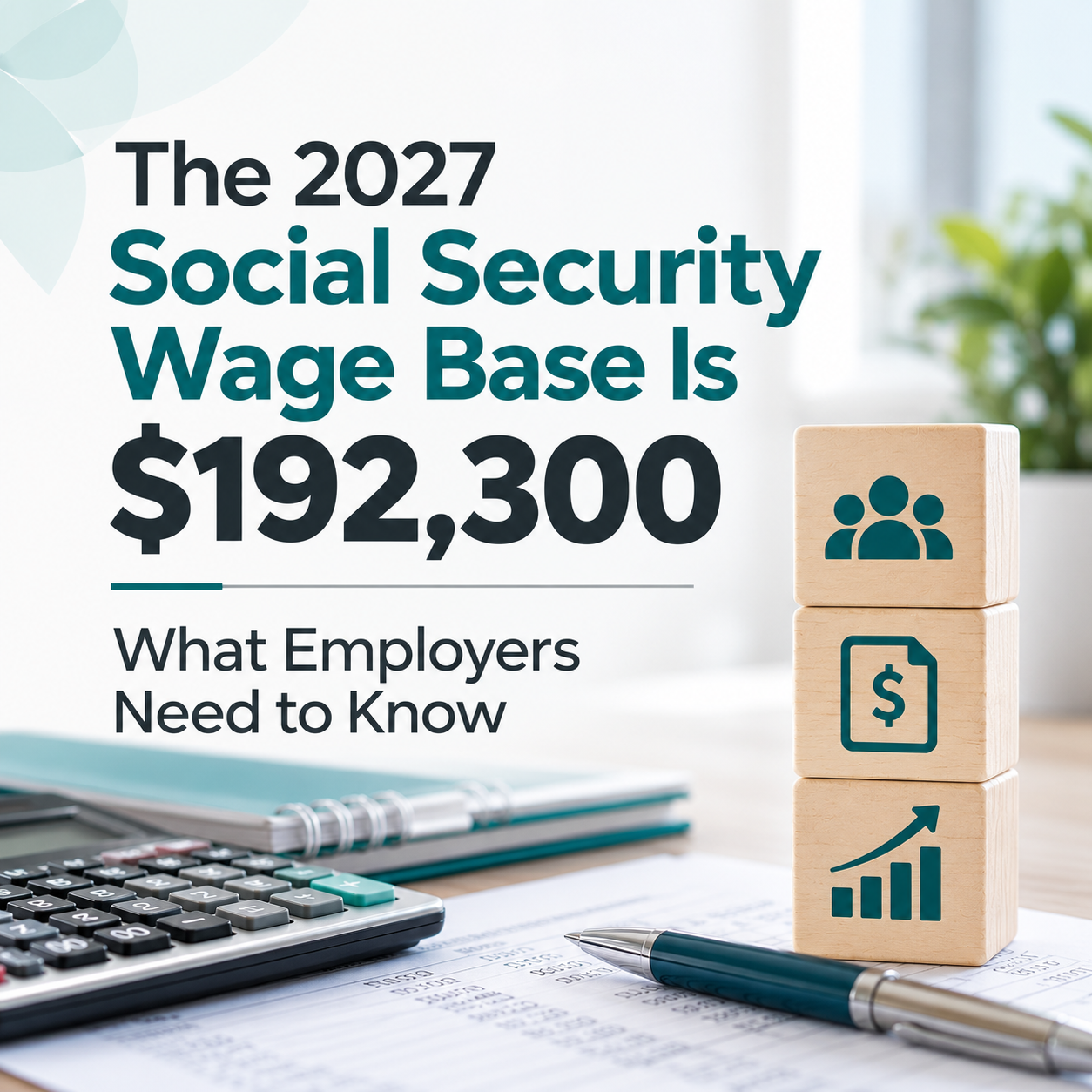
On October 14, the Social Security Administration announced its annual adjustments for 2027. For employers, the number that matters most is the Social Security wage base, which rises to $192,300 next year, up $7,800 from $184,500 in 2026.
That figure is also higher than the $190,200 the Social Security Trustees projected in June. If you built your 2027 payroll tax budget on the projection, it is already running a little short.
Here is what changes and what stays the same.
Social Security tax (OASDI) is 6.2% for the employee and 6.2% for the employer, but only on wages up to the annual wage base. Once an employee's wages for the year reach that limit, Social Security withholding stops for the rest of the calendar year, and so does the employer's matching share.
Medicare tax works differently. The 1.45% employee and 1.45% employer Medicare tax applies to every dollar of wages, with no cap. That is why the combined employee rate of 7.65% only holds until an employee hits the wage base. After that, only Medicare continues.
| 2026 | 2027 | |
|---|---|---|
| Social Security wage base | $184,500 | $192,300 |
| Maximum employee Social Security tax | $11,439.00 | $11,922.60 |
| Maximum employer Social Security tax | $11,439.00 | $11,922.60 |
| Social Security tax rate | 6.2% each | 6.2% each |
| Medicare tax rate | 1.45% each, no wage limit | 1.45% each, no wage limit |
For every employee earning at or above the new wage base, both the employee and the employer will pay $483.60 more in Social Security tax in 2027.
Employees earning less than $184,500 will not notice anything. Their wages were fully subject to Social Security tax before, and they still are.
Employees earning above $184,500 will pay Social Security tax on an additional $7,800 of wages. For employees who earn well above the base, the most visible effect is timing: withholding will continue a little longer into the year before it stops.
There is also a seasonal effect worth anticipating. Employees who reached the 2026 wage base this fall have been seeing larger paychecks since their Social Security withholding stopped. That withholding starts again with their first paycheck of 2027. Nothing is wrong, but it can look like a pay cut on the paystub, and it tends to generate questions in January.
Social Security and Medicare taxes apply to wages when they are paid, not when the work was performed. A paycheck for work done in the last week of December 2026 that is paid in January 2027 counts toward the 2027 wage base and is reported on the 2027 Form W-2.
The same rule applies to year-end bonuses. A bonus paid on December 31 counts toward 2026. The same bonus paid on January 2 counts toward 2027. For employees who have already reached the 2026 wage base, that difference changes how much Social Security tax is withheld from the bonus.
Additional Medicare Tax. Employers must withhold an extra 0.9% Medicare tax on wages paid to an employee in excess of $200,000 in a calendar year. Withholding starts in the pay period in which wages cross $200,000 and continues through year-end, regardless of the employee's filing status or wages from any other job. There is no employer match on the additional 0.9%. The $200,000 withholding threshold is not adjusted for inflation and has not changed since the tax took effect in 2013.
Employees with more than one employer. Each employer applies the wage base separately, based only on the wages it pays. An employee who changes jobs mid-year, or holds two jobs at once, can end up with more than the annual maximum withheld across all employers combined. That excess is not refunded by the employers. The employee claims it as a credit on their individual income tax return. The exception is when a single employer withholds too much on its own, which is an error that employer must correct.
Washington Paid Family and Medical Leave premiums are calculated on gross wages up to the Social Security wage base. In 2026, the premium rate is 1.13% on wages up to $184,500. As the wage base rises to $192,300, the wage cap used for Paid Leave premiums rises with it.
The 2027 Paid Leave premium rate itself is set separately by the Employment Security Department and is typically announced in late October. Employers with 50 or more employees will want both numbers before finalizing 2027 payroll budgets.
WA Cares works differently. Its 0.58% employee premium has no wage cap, so the Social Security wage base does not affect it.
A wage base change is one of the quieter adjustments that happens every January. When it is handled correctly, nobody notices. When it is not, the result is under-withheld or over-withheld taxes, corrected W-2s, and amended quarterly filings.
PayNW updates federal and state tax tables for each new year, applies the new wage base, tracks year-to-date wages for every employee, and stops and restarts Social Security withholding automatically. The same wage history flows into your quarterly filings and year-end Forms W-2. Budgeting, bonus timing, and employee communication remain your decisions, and we are glad to help you think through how the payroll side of each one will play out.
If you want to review your year-end payroll calendar or see how the 2027 changes will affect your payroll, let's talk.


Washington State’s Employment Security Department (ESD) rolled out emergency rules last week that ease the burden of temporary layoffs during...

Washington State’s Employment Security Department (ESD) rolled out emergency rules that ease the burden of temporary layoffs.
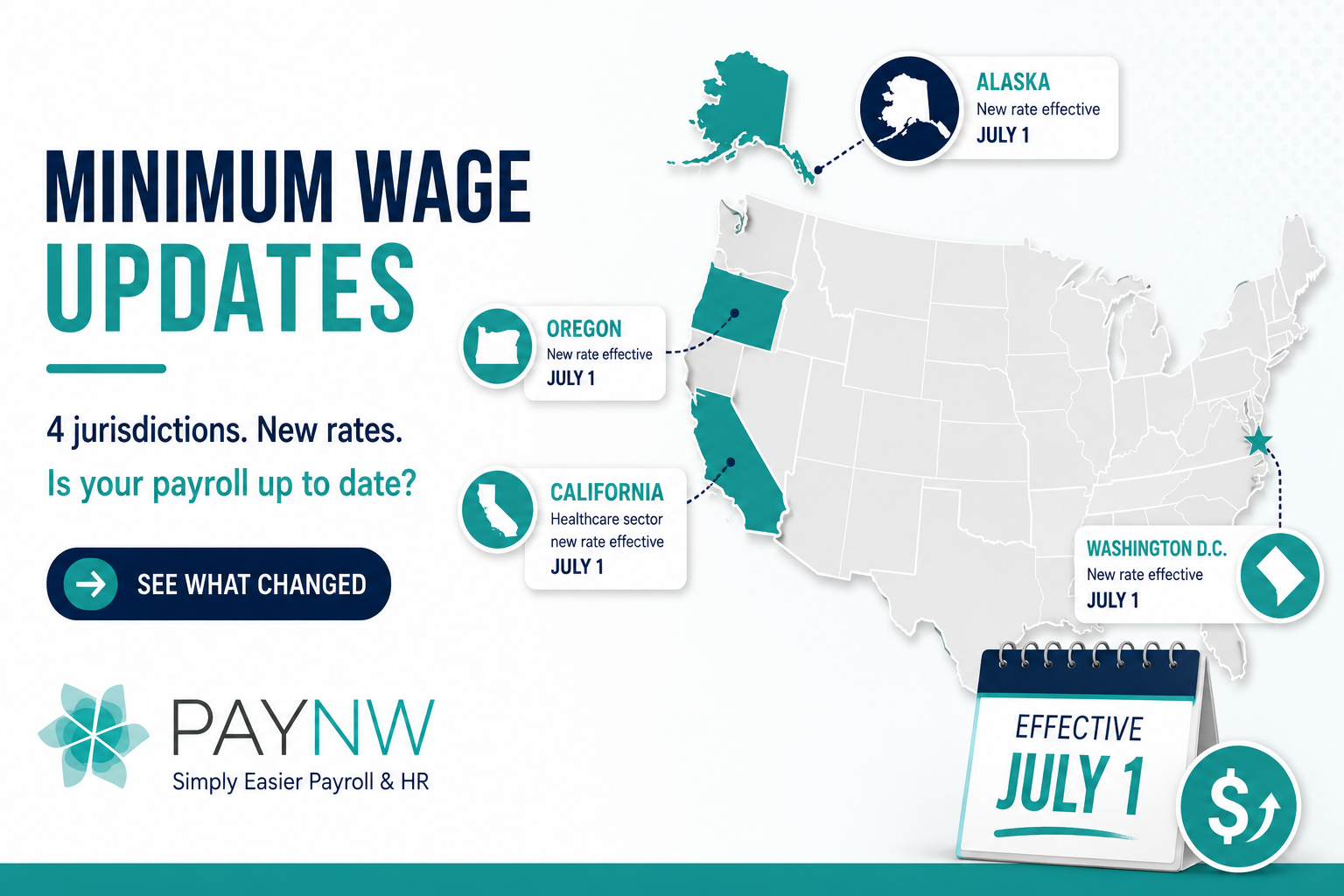
Prepare for the July 1, 2026 minimum wage increases across Alaska, Oregon, Washington D.C., and California. Ensure compliance before your next...